EcoPatch: Cut Pothole Costs, Save Budgets
Infrastructure, Municipal Budgets, Road Maintenance
The True Cost of Potholes—And How EcoPatch Saves Municipal Budgets
For public works departments, facilities managers, and agencies responsible for paved assets, potholes are more than a nuisance—they are a recurring, budget-draining liability. Understanding the real financial and efficiency costs of traditional repairs is the first step toward stretching limited maintenance dollars further. That’s where EcoPatch offers a smarter alternative.
The Hidden Financial Burden of Traditional Hot-Mix Repairs
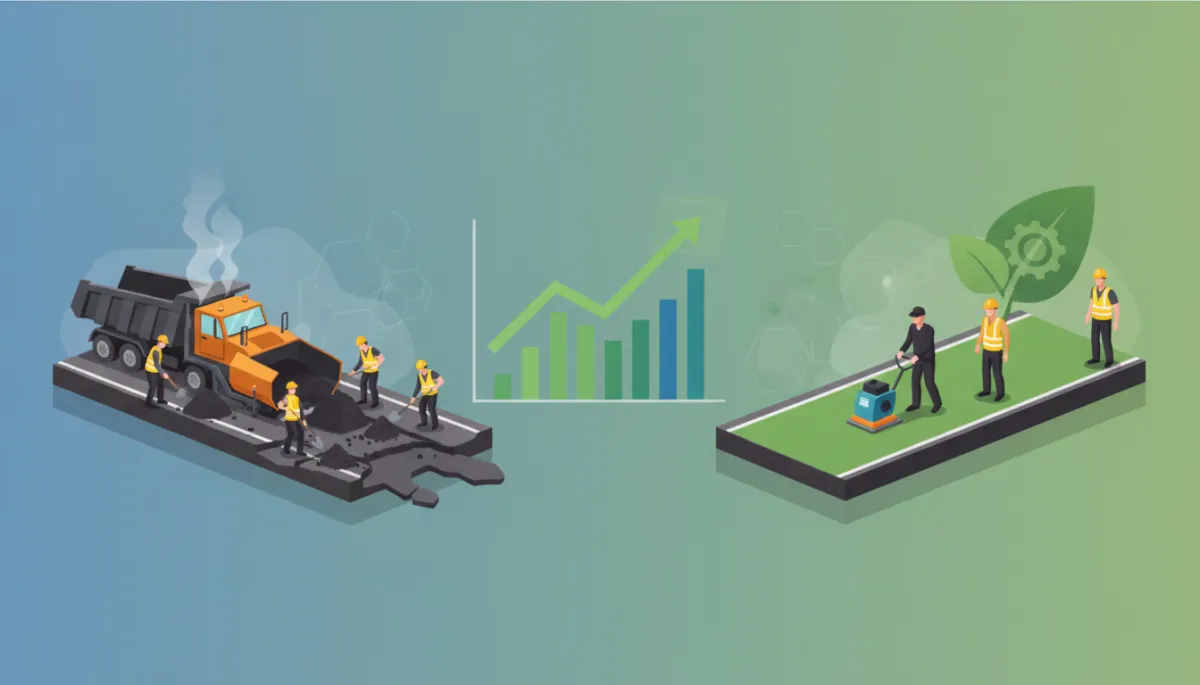
Traditional hot-mix asphalt repairs look straightforward on paper, but the real costs add up quickly. Agencies typically need a large crew, multiple trucks, and heavy machinery such as rollers and hot boxes. Each of these components carries direct and indirect expenses—labor, fuel, maintenance, insurance, and downtime when equipment is out of service or waiting on material deliveries.
On top of that, hot-mix is highly time-sensitive. Once produced at the plant, it has a limited working window before it cools and becomes unusable. If traffic delays, weather shifts, or site complications slow the crew, a portion of the load often ends up as wasted material that still has to be paid for and disposed of. The result is a repair method that can be as inefficient financially as it is operationally.
Efficiency Challenges: Big Crews, Heavy Gear, and Short Work Windows
From an efficiency standpoint, hot-mix repairs demand significant coordination. Mobilising a large crew means scheduling around other projects, overtime rules, and union requirements. Heavy machinery must be transported to and from the site, often requiring lane closures and traffic control that further inflate costs and frustrate the public. All of this to fix what may be a relatively small pothole or localised failure in the pavement surface.
These constraints limit how many repairs a city can perform in a day or week. When crews are tied up on one extensive operation, other potholes continue to grow, increasing vehicle damage claims and citizen complaints. In other words, inefficient repair methods don’t just cost more per patch—they also allow the overall problem to expand, compounding future expenses.
EcoPatch: Minimal Labor, Maximum Output
EcoPatch rethinks the repair process from the ground up, focusing on financial and operational efficiency. The system is designed to be installed with a minimum labor requirement of just two workers and a plate compactor. That’s a fraction of the manpower needed for traditional hot-mix operations, and it eliminates the need for heavy rollers, hot boxes, or large support fleets for many day-to-day repairs.
For agencies, this streamlined approach unlocks powerful staffing flexibility. Smaller crews can be deployed to multiple locations simultaneously, or maintenance teams can integrate EcoPatch repairs into other routine tasks without major scheduling disruptions. The result is more potholes repaired per day with the same or fewer personnel hours, directly improving the productivity of every dollar spent on labor.
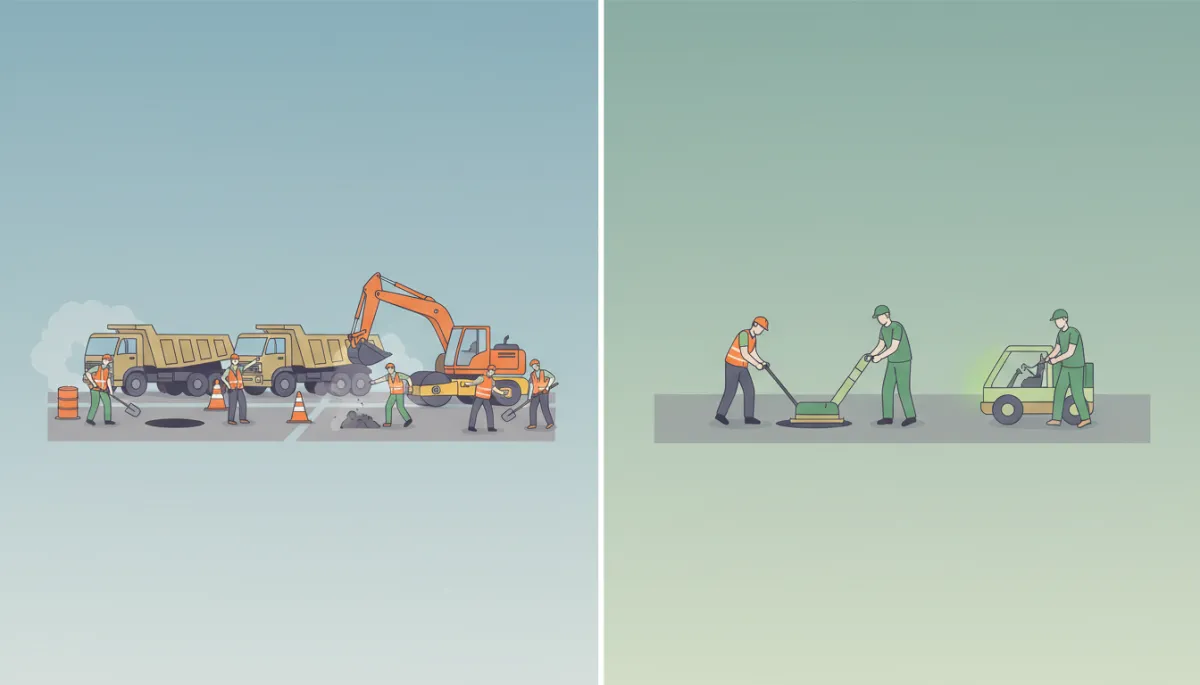
Smaller EcoPatch crews complete more repairs per shift with lower overhead.
Zero Material Waste: Every Dollar of Mix Goes into the Road
One of the most significant financial advantages of EcoPatch is its zero material waste approach. Unlike hot-mix, which can expire before it is used, EcoPatch materials are applied as needed, directly into the repair area, with no leftover product that must be discarded. This means agencies pay only for what ends up on the pavement, not for what ends up in a landfill or spoils in the truck.
Over a season, eliminating material waste can translate into substantial savings—freeing funds that can be redirected to preventive maintenance, crack sealing, or larger rehabilitation projects. It also simplifies inventory management and reduces the risk of over-ordering, further protecting tight budgets.
Stretching Municipal Maintenance Budgets Further
When you combine fewer workers per repair, reduced equipment needs, and zero material waste, EcoPatch becomes a powerful tool for any city or agency striving to do more with less. Lower per-repair costs mean that the same annual budget can cover a greater number of potholes and surface failures, improving overall network condition and public satisfaction without asking for additional funding.
Beyond the direct savings, improved efficiency also cuts secondary costs: fewer emergency call-outs, fewer vehicle damage claims, and fewer work zones disrupting traffic. For budget-conscious agencies and businesses managing private lots or campuses, EcoPatch offers a practical way to regain control over pavement maintenance, protect assets, and demonstrate responsible stewardship of every maintenance dollar.