All-Weather Cold-Mix Revolutionizes Malaysian Roads
Infrastructure, Road Maintenance, Cold-Mix Asphalt
Monsoon vs. Asphalt: Why All-Weather Cold-Mix Is Changing Malaysian Road Repair
For Malaysian councils, concessionaires, and facility managers, the monsoon season has always meant one thing: potholes multiply just as repair work grinds to a halt. A new generation of all‑weather cold‑mix, led by EcoPatch’s advanced polymer technology, is rewriting that playbook.
How Monsoon Rains Disrupt Conventional Road Repairs
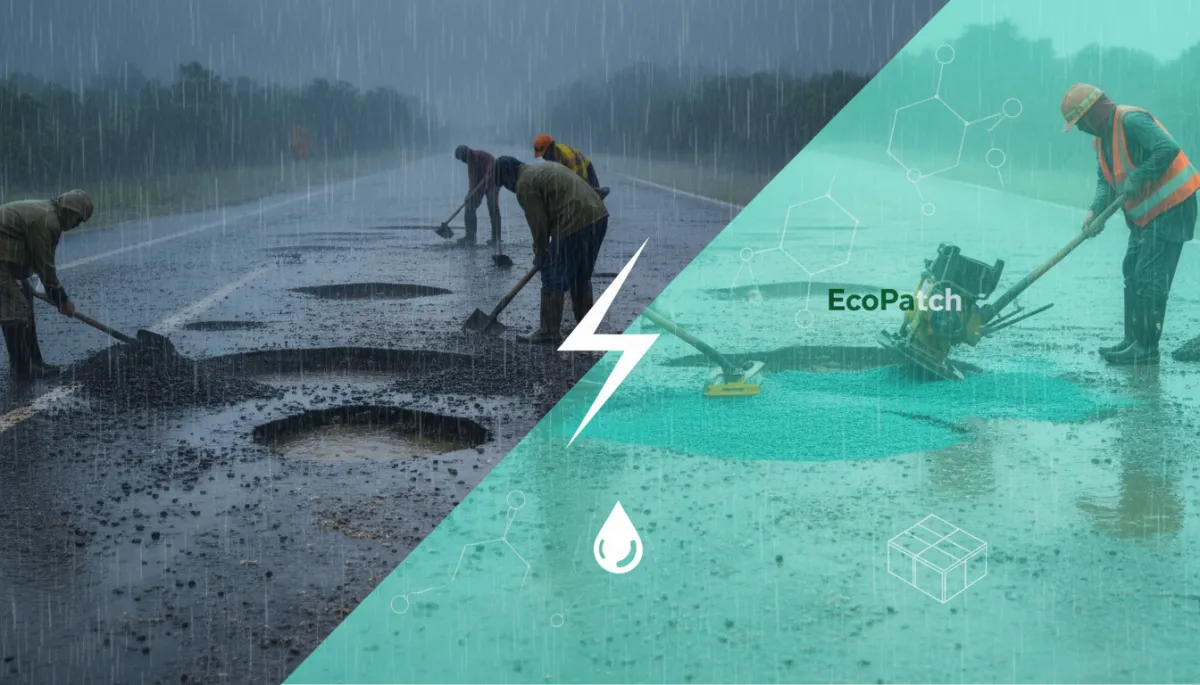
Malaysia’s northeast and southwest monsoon periods routinely bring prolonged, intense rainfall. According to local reports, these downpours accelerate pavement deterioration while simultaneously making repairs far more difficult to execute and maintain (The Star, 2023; New Straits Times, 2023). For agencies and businesses responsible for road assets, the challenges are familiar:
Waterlogged surfaces prevent proper bonding of hot-mix asphalt, forcing crews to postpone works for days until pavements are dry.
Fresh patches are quickly ruined when sudden showers wash out fine material, strip binder, or cause premature ravelling and pothole re‑formation.
Access and safety issues arise as flooded sections delay material deliveries and increase risk for on‑site crews.
The result is a familiar annual cycle: reactive patching before monsoon, months of “wait and see” during heavy rain, followed by a backlog of failures once the skies clear. For asset owners, this translates into higher lifecycle costs, public complaints, and reputational risk when critical access roads, industrial parks, or logistics routes become pockmarked and unsafe.
What Makes EcoPatch Different: Polymer Science Built for Tropical Weather
All‑weather cold‑mix technologies have advanced rapidly in recent years. International research into polymer‑modified cold mixes shows that specialised binders can deliver strong performance at ambient temperatures while cutting energy use and emissions compared to hot mix (Scientific Reports, 2026; Highways Today, 2026). EcoPatch builds on this global innovation curve with a formulation engineered specifically for humid, rain‑prone climates like Malaysia.
At the heart of EcoPatch is an advanced polymer‑modified binder. Instead of relying solely on conventional bitumen, EcoPatch incorporates tailored polymers that change how the mix behaves in the presence of water and under traffic:
Water‑tolerant adhesion: The polymer system is designed to displace surface moisture and grip both wet asphalt and concrete, allowing application on damp or lightly water‑filled potholes without waiting for full drying.
Non‑washable matrix: Once compacted, the interlocking aggregate structure and cohesive polymer binder resist being washed away by passing stormwater, unlike traditional cold patch that can ravel or flush out under heavy rain.
Traffic‑activated densification: EcoPatch is formulated so that vehicle loads further compact and seal the repair, quickly developing a tight, durable surface even when the surrounding pavement is still damp.
For agencies under pressure to reduce carbon footprints, the cold‑mix approach also avoids energy‑intensive aggregate heating, aligning with the broader shift toward low‑carbon asphalt solutions documented in recent international guidelines (NAPA PCR updates, 2026).
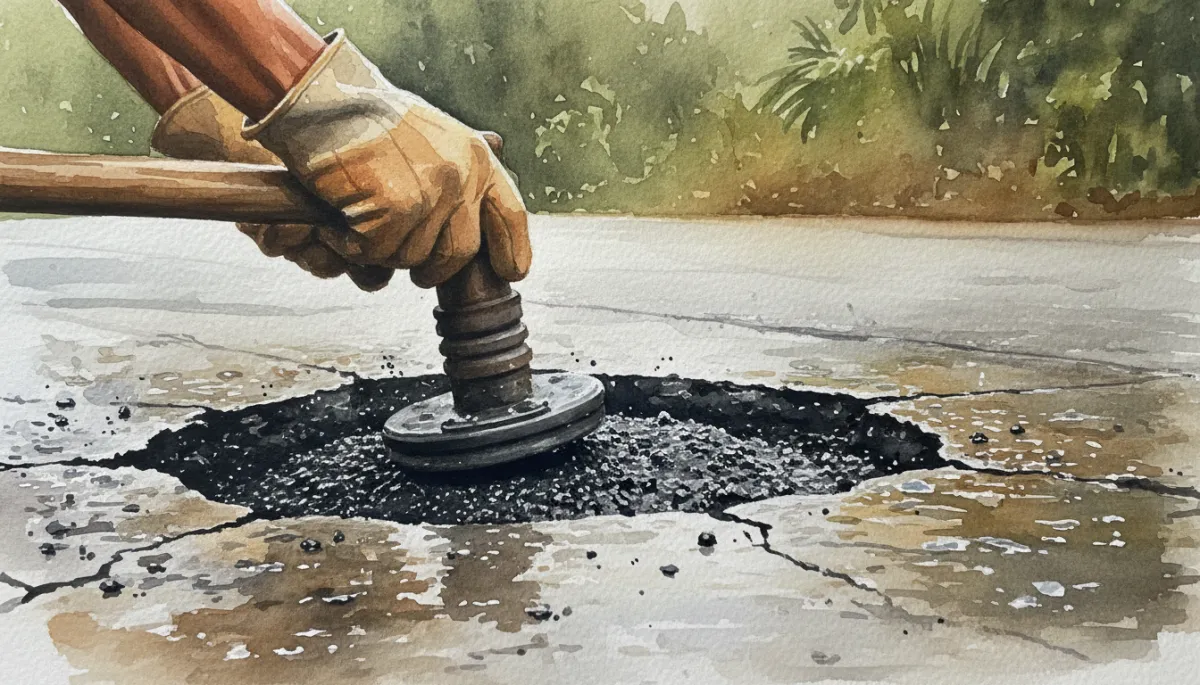
Polymer-modified cold-mix bonds in wet potholes, avoiding costly rework after storms.
Strategic Advantages for Businesses and Public Agencies
For local authorities, highway concessionaires, industrial park managers, and logistics operators, the shift to an all‑weather solution like EcoPatch is less about “new material” and more about changing the economics of maintenance.
Fewer weather‑related shutdowns: Crews can work through light rain or on damp pavements, smoothing workloads across the year instead of compressing everything into short dry windows.
Lower repeat‑repair rates: Because the mix does not wash out easily, patches last longer through consecutive storms, reducing truck rolls, labour hours, and traffic management costs.
Improved road user satisfaction: Fewer recurring potholes mean fewer complaints, less damage to vehicles, and a safer experience for residents, tenants, and freight operators.
💡 For asset managers: Integrating EcoPatch into your maintenance regime enables year‑round, small‑crew interventions that keep networks serviceable even when long‑term resurfacing must be deferred.
From Reactive Fixes to Resilient Networks
Monsoon rains are not going away—and climate projections suggest more intense events in years to come. Sticking with traditional hot‑mix and basic cold patch effectively accepts that road repairs will stop whenever the weather turns. By contrast, polymer‑enhanced, all‑weather cold‑mix solutions like EcoPatch give Malaysian agencies and businesses a practical way to keep roads safe, accessible, and cost‑effective to maintain, regardless of the season.
For organisations responsible for critical corridors—whether it is a municipal council, a toll‑road operator, or an industrial estate—the question is no longer if monsoon will damage your pavements, but how prepared your maintenance strategy is to respond. EcoPatch’s advanced polymer technology offers a way to move from reactive, weather‑ dependent patching to a resilient, planned approach that keeps asphalt performing even when the rain refuses to stop.